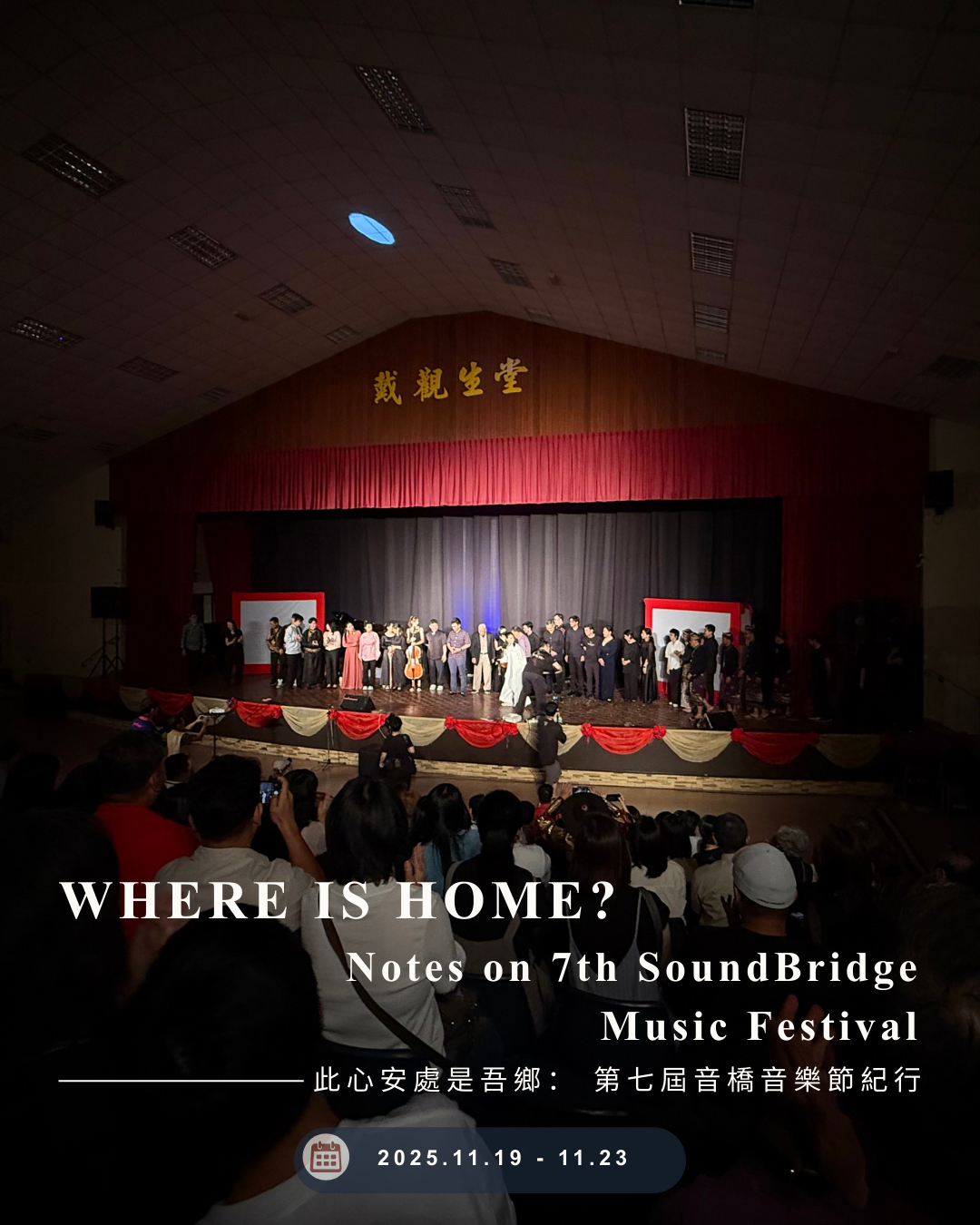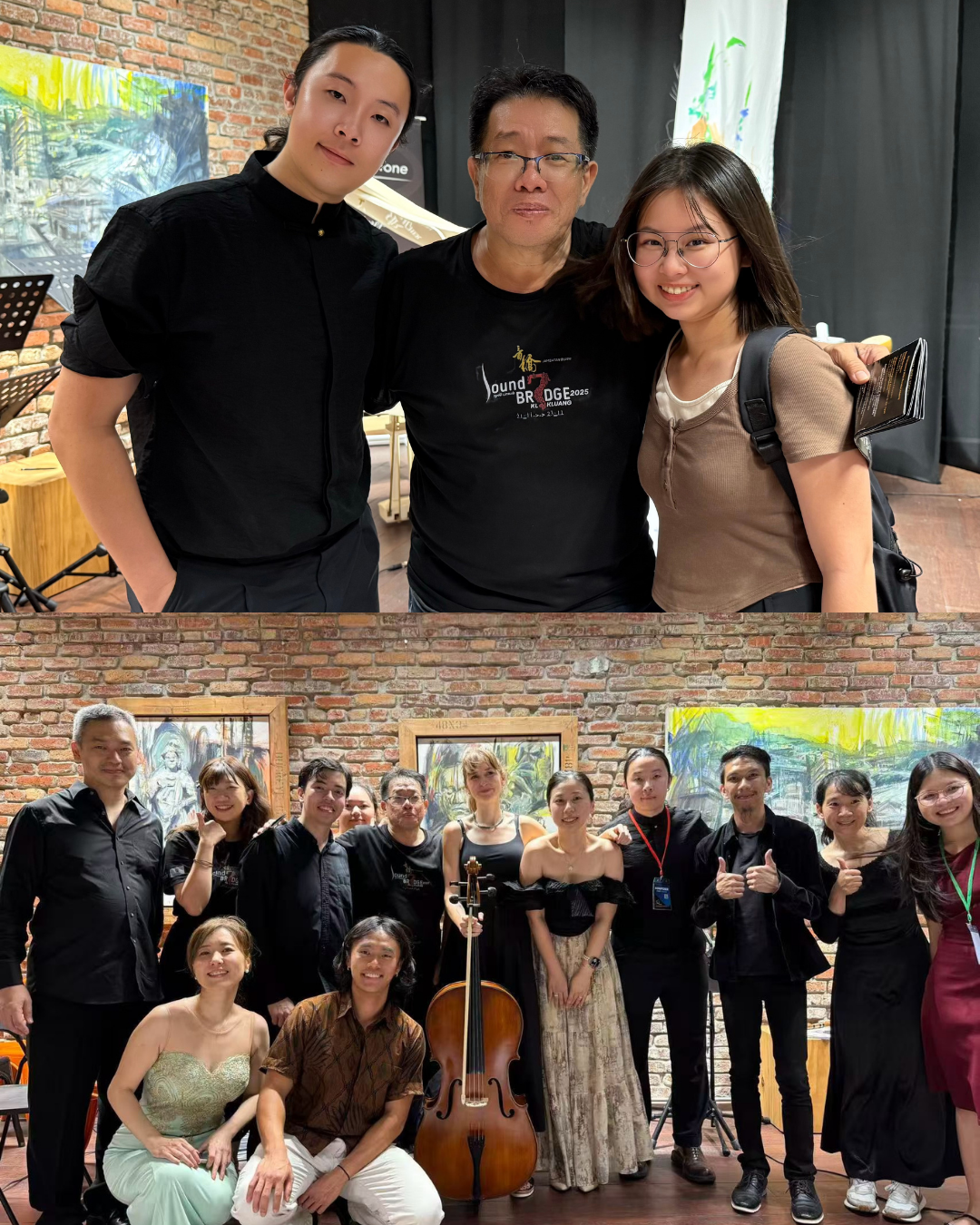
在此心安處,聽見南洋的脈搏:第七屆音橋音樂節紀行 Pulse of Nanyang: Notes on the 7th SoundBridge Music Festival
文/黃宣禔
#01. 當代藝術在居鑾:小鎮裡的迴響
音橋音樂節(SoundBridge)創辦人鍾啟榮教授來自柔佛居鑾。今年,他將這場國際盛事帶回故里,讓世界各地的藝術家齊聚於南峇山腳。同樣出身大馬小鎮(檳城爪夷)的我,深知在資源匱乏下,這份堅持何其不易。
看著鍾老師將前衛藝術帶回鄉土並落地生根,身為後輩,我除了敬佩,更深受啟發。或許相比國外的藝術殿堂,我們的硬體起步較慢;但眼前這股「軟實力」──創作者的韌性與觀眾的熱情,讓我確信:馬來西亞的現代音樂,正走在正確且踏實的路上。
#02. 魔幻寫實的聲景:噪音也是一種音樂
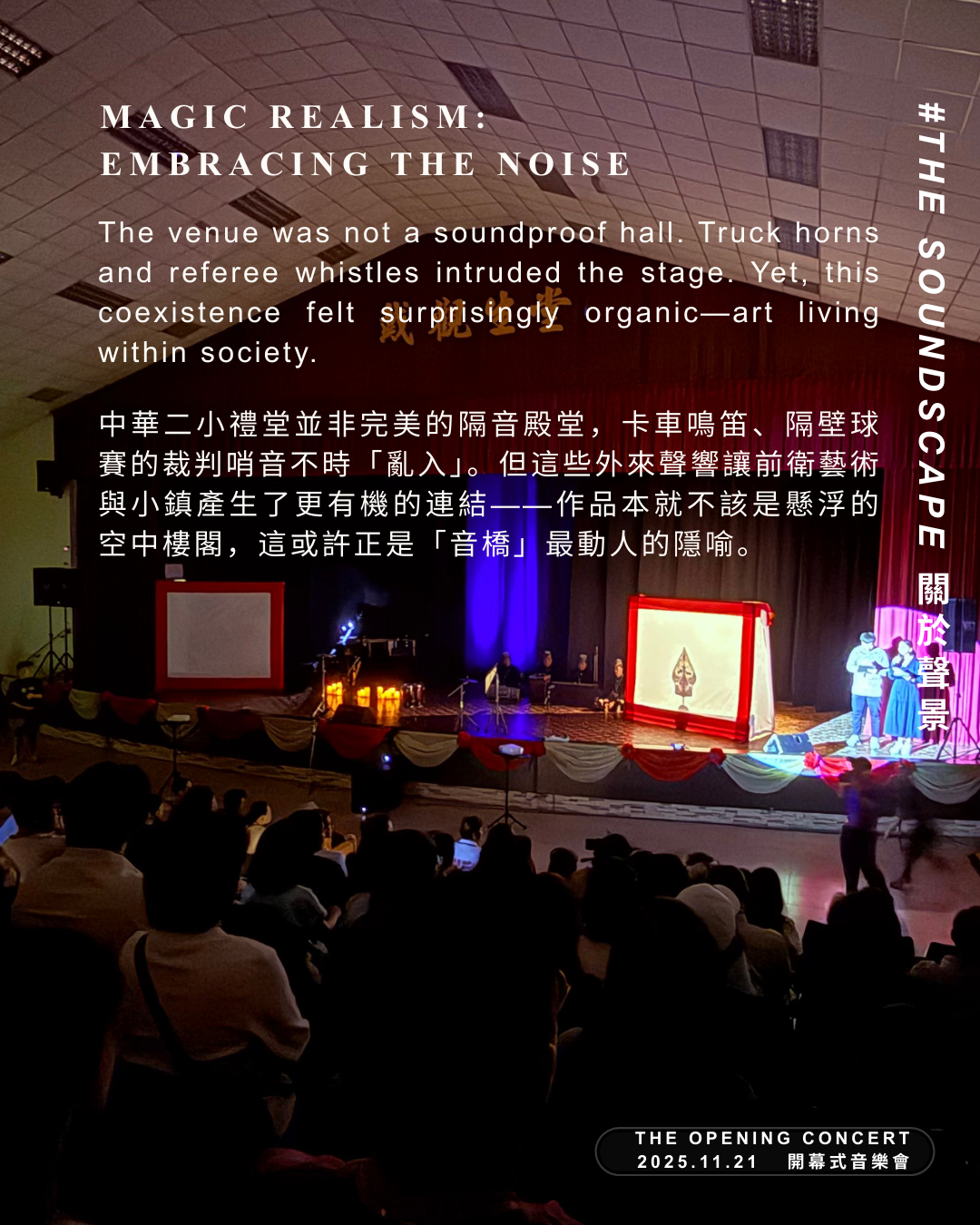
開幕音樂會在中華二小禮堂舉行。這裡並非完美的隔音殿堂;演奏時,外頭的卡車鳴笛、隔壁球賽的裁判哨音,竟不時「亂入」舞台。奇妙的是,這些外來聲響在此刻顯得如此合理。那一刻,我彷彿看見理想的具象化──當代藝術與社會共生。作品本是文化的結晶,不該是懸浮的空中樓閣。這些闖入的環境音,反而讓前衛聲響與小鎮產生了更有機的連結——這或許正是「音橋」最動人的隱喻。
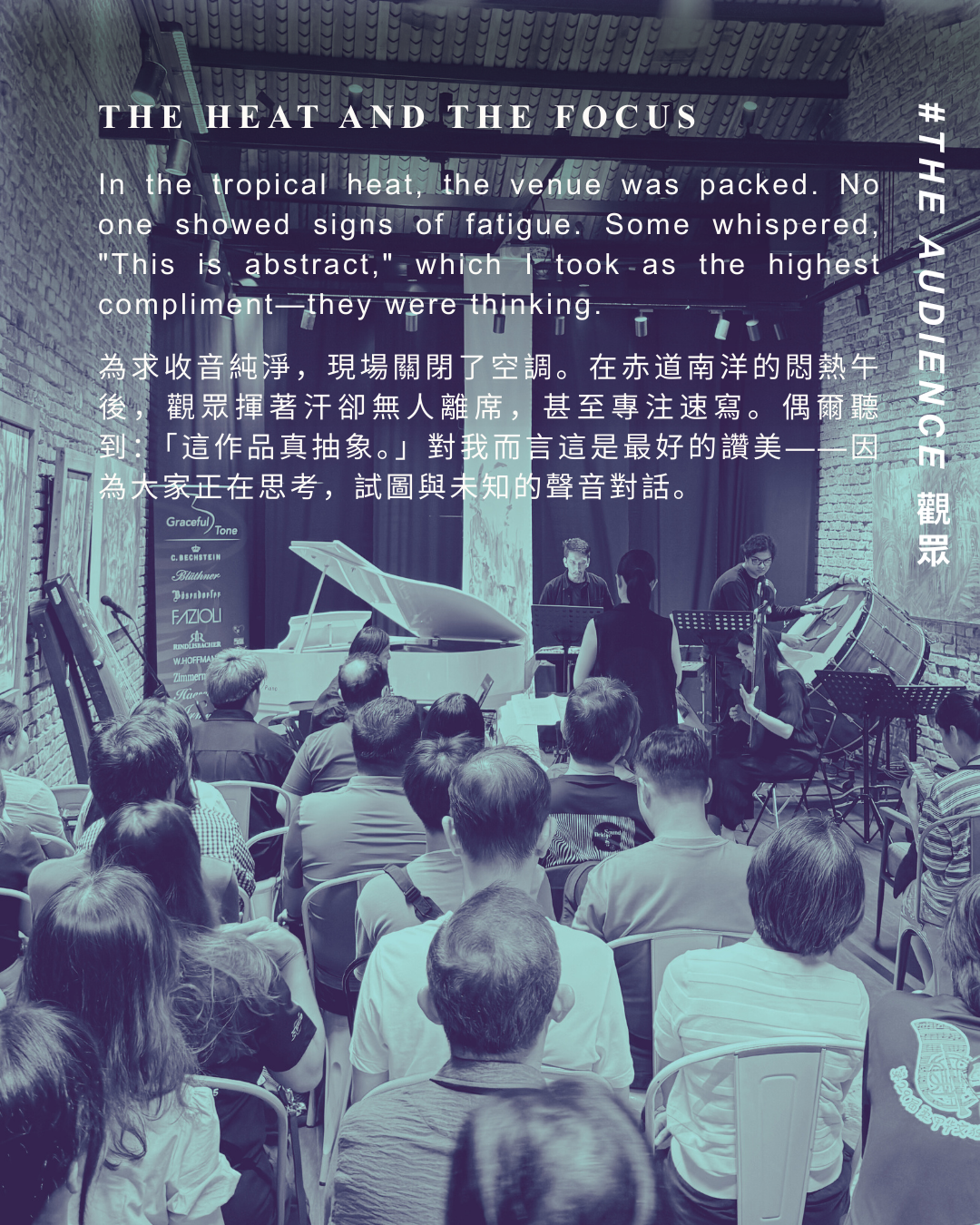
在廣日子(Kluang Days)的幾場演出更令我震撼。為求收音純淨,現場需關閉空調與風扇;在赤道南洋的悶熱午後,這無疑是場高溫考驗。然而,音樂會場場爆滿。前排觀眾揮著汗,卻無一人顯露倦意,甚至有人專注地速寫著演出的片刻。偶爾聽到身後低語:「這作品真抽象。」對我而言,這是最好的讚美——因為他們正在思考,試圖與未知的聲音對話。
#03. 關於作品:把算盤與石臼搬上舞台
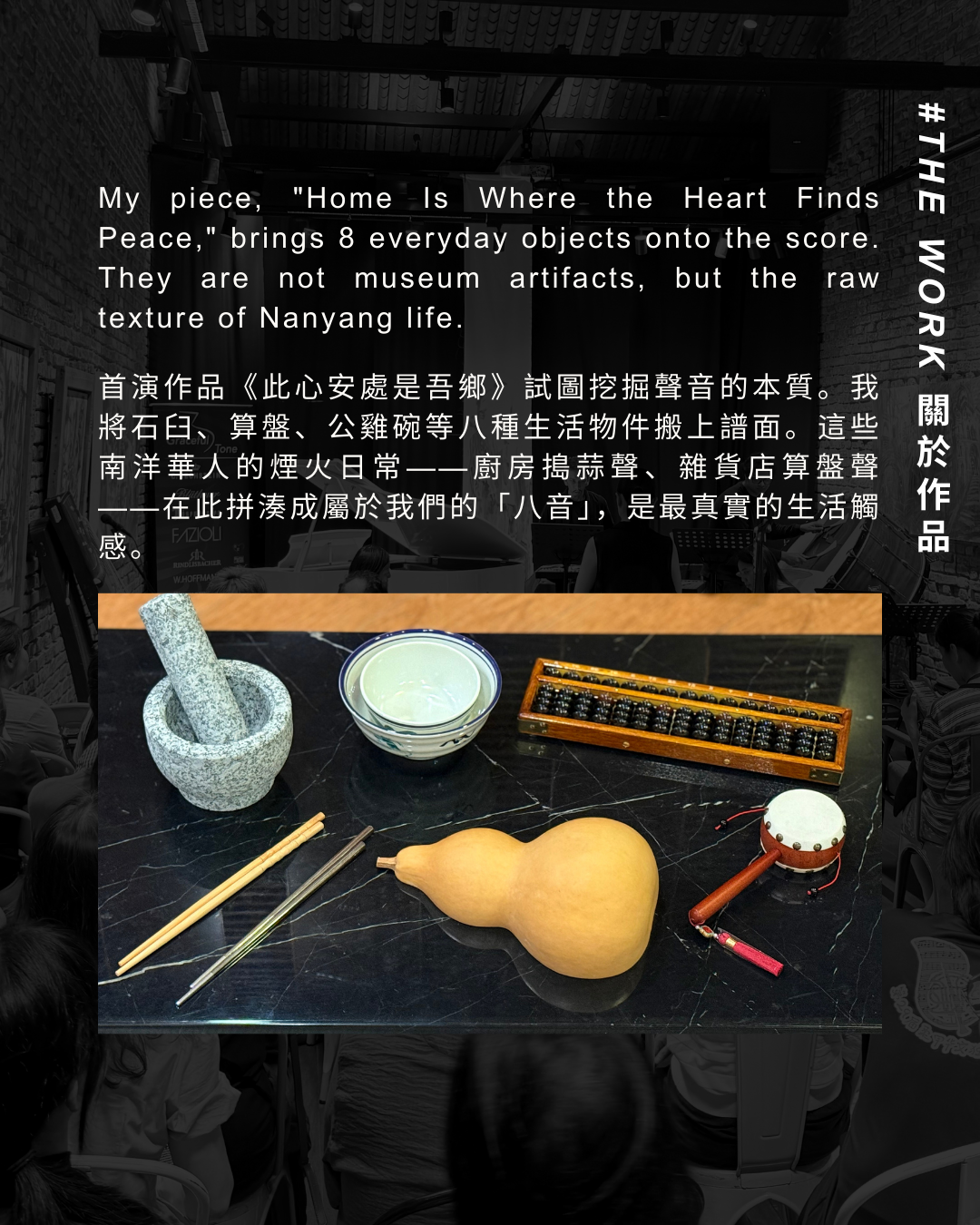
參展作品《此心安處是吾鄉》(Home Is Where the Heart Finds Peace)試圖挖掘聲音的本質。我將石臼、算盤、公雞碗等八種生活物件搬上譜面;這些南洋華人的煙火日常──廚房裡的搗蒜聲、雜貨店的算盤聲、飯桌上的碗筷碰撞——在此拼湊成屬於我們的「八音」。它們絕非博物館裡的標本,而是最真實的生活觸感。
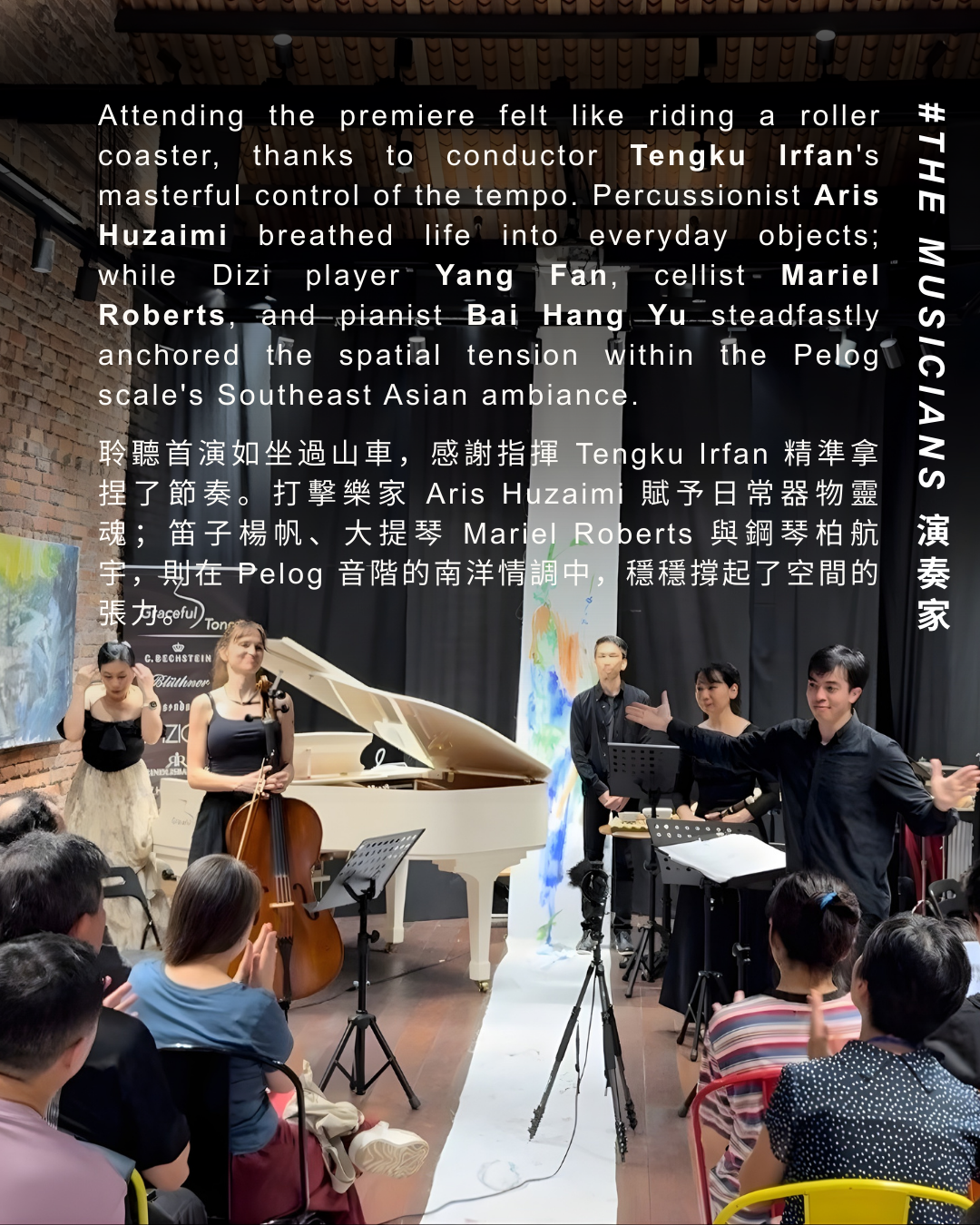
聆聽首演如坐過山車,但隨著音符落下,更多的是「被理解」的悸動。特別感謝指揮Tengku Irfan精準拿捏了「有序」與「混亂」間的游移節奏。打擊樂家Aris Huzaimi賦予了日常器物鮮活的靈魂,將生活煙火轉化為藝術聲響;笛子演奏家楊帆以絕佳的氣息控制將想像具象化;大提琴Mariel Roberts與鋼琴柏航宇則在Pelog音階的南洋情調中,穩穩撐起了空間的張力。
#04. 結語:流浪的河,在居鑾找到了入海口
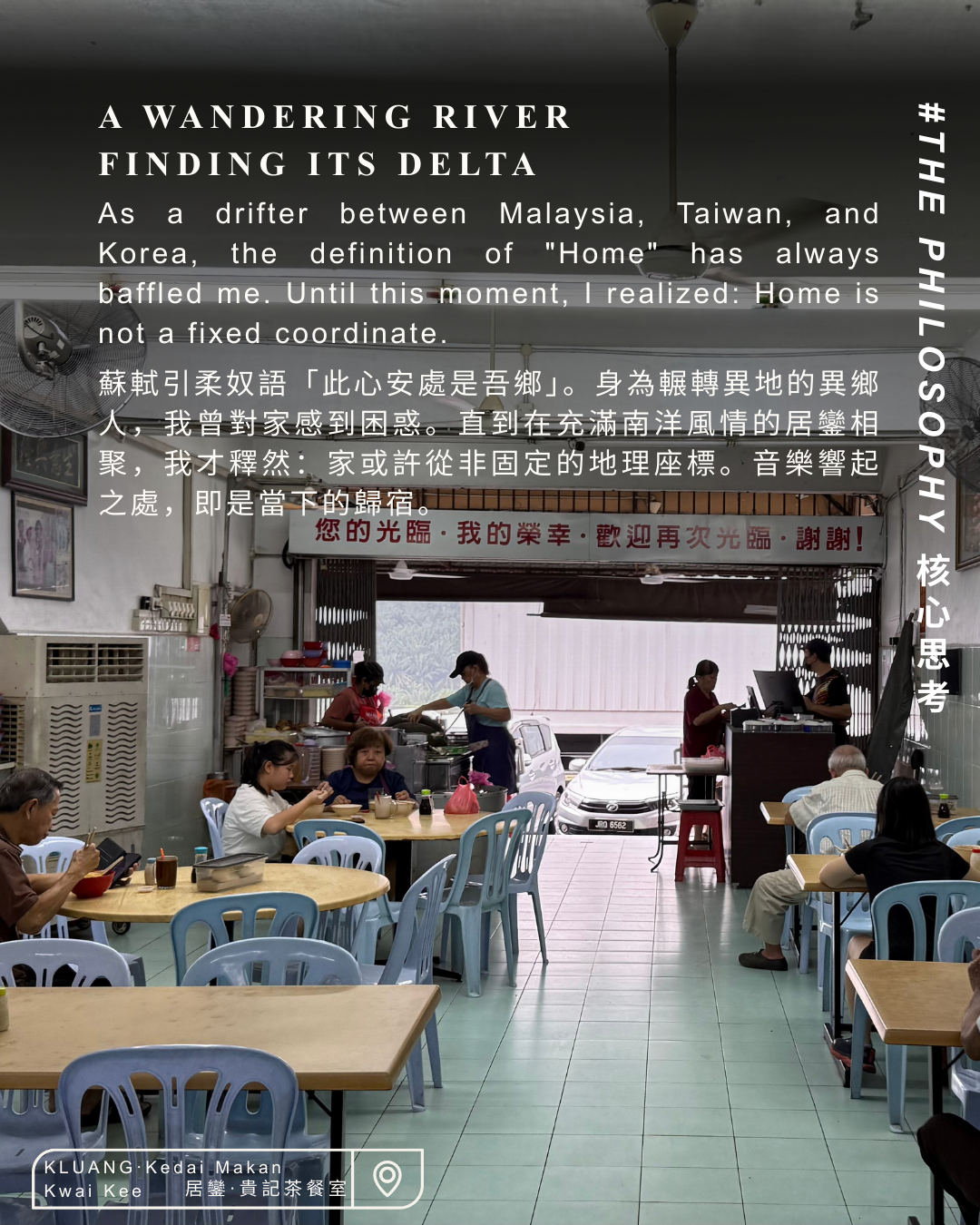
蘇軾引柔奴之語「此心安處是吾鄉」,我曾反覆咀嚼。身為輾轉於大馬、台灣與韓國的異鄉人,「家」的定義始終令我困惑。直到此刻,在充滿南洋風情的居鑾與各國音樂家相聚,我才釋然:家,或許從非固定的地理座標。正如曲末所有衝突終歸平靜,音樂響起之處,即是當下的歸宿。
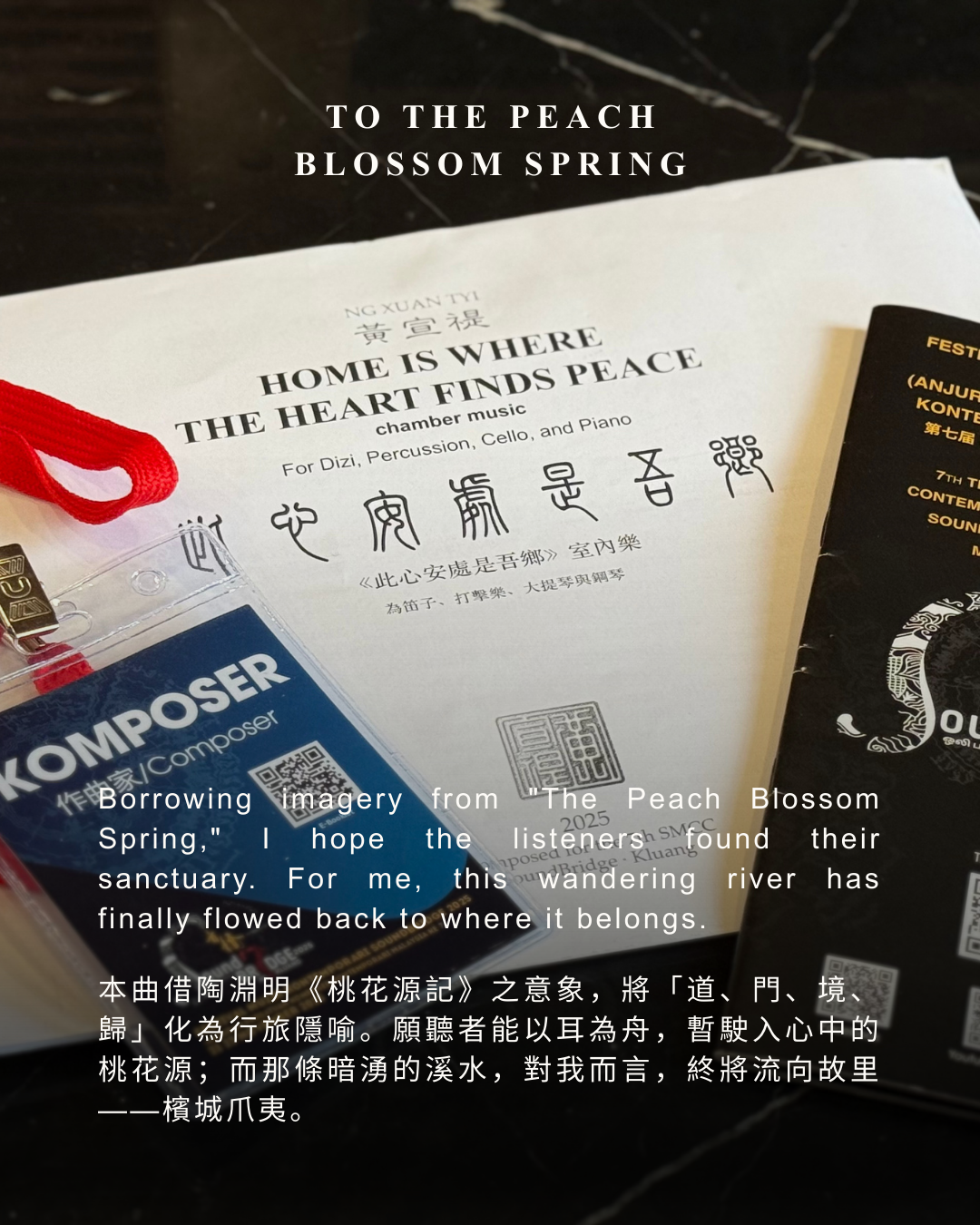
本曲借陶淵明《桃花源記》之意象,將「道、門、境、歸」化為行旅隱喻。願居鑾午後的聽者能以耳為舟,暫駛入心中的桃花源;而那條暗湧的溪水,對我而言,終將流向故里──檳城爪夷。
感謝鍾啟榮教授與音橋團隊,為馬來西亞現代音樂開創了美好前景。謝謝你們,讓這條流浪的河暫獲入海口,也給了遊子一個回家的理由,共襄盛舉。
Pulse of Nanyang: Notes on the 7th SoundBridge Music Festival
#01. Contemporary Art in Kluang: Echoes in a Small Town
Professor Chong Kee Yong, the founder of the SoundBridge Contemporary Music Festival, hails from Kluang, Johor. This year, he brought this international event back to his hometown, gathering artists from all over the world at the foot of Mount Lambak. As someone who also comes from a small Malaysian town (Jawi, Penang), I deeply understand how difficult it is to maintain such persistence in an environment with scarce resources.
Watching Professor Chong bring avant-garde art back to the local soil to take root, as a junior, I felt not only admiration but also deep inspiration. Perhaps compared to foreign art halls, our hardware infrastructure had a slower start; but the "soft power" before my eyes—the resilience of creators and the enthusiasm of the audience—convinced me that Malaysian contemporary music is walking on a correct and solid path.
#02. A Magic Realist Soundscape: Noise is Also Music
The opening concert was held at the hall of SJK(C) Chong Hwa 2. This is not a perfectly soundproofed hall; during the performance, the horns of trucks outside and the referee whistles from a ball game next door would occasionally "intrude" onto the stage. Strangely enough, these external sounds felt so reasonable at that moment. In that instant, I seemed to see the embodiment of an ideal—the coexistence of contemporary art and society. Works are the crystallization of culture and should not be castles in the sky. These intruding environmental sounds instead created a more organic connection between avant-garde sounds and the small town—perhaps this is the most moving metaphor of "SoundBridge."
The performances at Kluang Days were even more shocking to me. To ensure pure sound recording, the air conditioning and fans at the venue had to be turned off; on a sultry afternoon in the equatorial Nanyang, this was undoubtedly a high-temperature test. However, the concerts were packed. The audience in the front rows was sweating but no one showed signs of fatigue, and some were even intently sketching moments of the performance. Occasionally, I heard whispers behind me: "This work is really abstract." To me, this is the best compliment—because they are thinking and attempting to dialogue with unknown sounds.
#03. About the Work: Bringing the Abacus and Mortar to the Stage
The participating work "Home Is Where the Heart Finds Peace" attempts to excavate the essence of sound. I brought eight daily life objects, such as a stone mortar, abacus, and rooster bowl, onto the musical score; these sounds of the daily life of Nanyang Chinese—the pounding of garlic in the kitchen, the clicking of the abacus in the grocery store, the collision of bowls and chopsticks at the dining table—are pieced together here to form our "Bayin" (Eight Sounds). They are by no means specimens in a museum, but the most real tactile sensations of life.
Listening to the premiere was like riding a roller coaster, but as the notes fell, there was more of a throb of "being understood." Special thanks to conductor Tengku Irfan for precisely grasping the shifting rhythm between "order" and "chaos." Percussionist Aris Huzaimi endowed the daily utensils with a fresh soul, transforming the smoke and fire of life into artistic sound; flutist Yang Fan concretized imagination with superb breath control; cellist Mariel Roberts and pianist Hang Yu Bo steadily supported the spatial tension within the Nanyang mood of the Pelog scale.
#04. Conclusion: The Wandering River Finds its Estuary in Kluang
I have repeatedly chewed over Su Shi's quote of Rou Nu's words: "Home is where the heart finds peace." As a stranger drifting between Malaysia, Taiwan, and South Korea, the definition of "home" has always confused me. It was not until this moment, gathering with musicians from various countries in Kluang, which is full of Nanyang style, that I felt relieved: perhaps home has never been a fixed geographical coordinate. Just as all conflicts return to peace at the end of the song, the place where music sounds is the destination of the present moment.
This piece borrows the imagery of Tao Yuanming's "The Peach Blossom Spring," transforming "path, door, realm, and return" into metaphors for a journey. I hope the listeners in the afternoon in Kluang could use their ears as boats to temporarily sail into the Peach Blossom Spring in their hearts; and for me, that undercurrent of a stream will eventually flow towards my hometown—Jawi, Penang.
Thank you to Professor Chong Kee Yong and the SoundBridge team for opening up a bright future for Malaysian contemporary music. Thank you all for letting this wandering river temporarily find an estuary, and for giving a wanderer a reason to go home and participate in this grand event.