聲響的巴別塔:在混亂與秩序之間,遇見約格.魏德曼 The Sonic Tower of Babel: Finding Order in Chaos with Jörg Widmann
(1) 現場直擊:大師身影
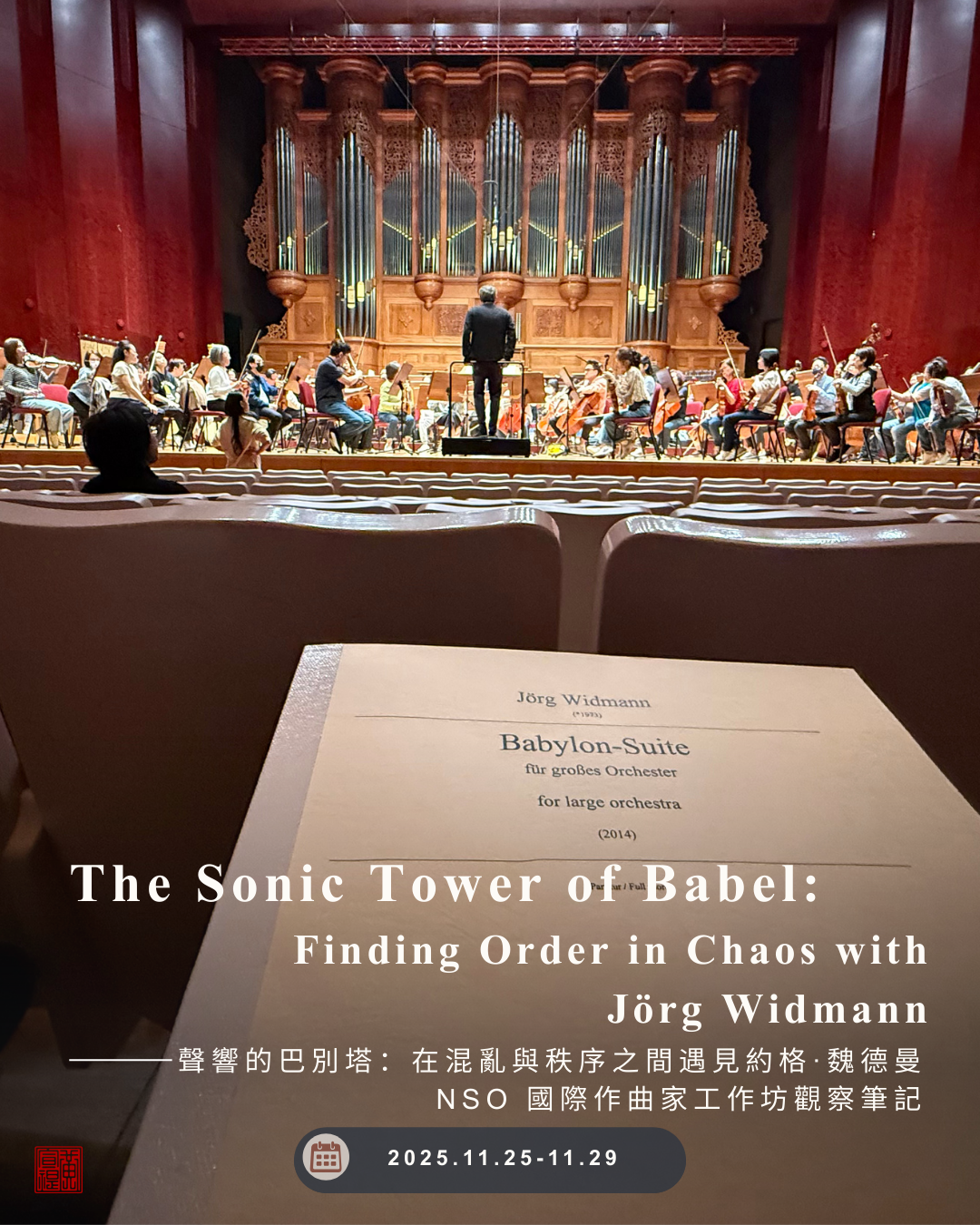
身為一名創作者,最幸福的時刻莫過於親眼見證腦中的聲響被實踐;而最震撼的時刻,則是看見一位大師如何打破規則,在廢墟中重建秩序。入選NSO「以樂會客 2.0」委創暨國際作曲家工作坊,對我們這一代年輕作曲家而言,是一場關於「當代聲音」的洗禮。本次活動最令人屏息的高潮,無疑是全才音樂家約格.魏德曼(Jörg Widmann)與NSO攜手呈現的《樂響啟示錄》。在這場11月29日的音樂會中,魏德曼身兼作曲家與指揮家,親自率領樂團,用他的《巴比倫組曲》(Babylon-Suite)為我們築起了一座現代的巴別塔,展現了無與倫比的舞台魅力。
(2) 排練室觀察:譜面上的螢光筆
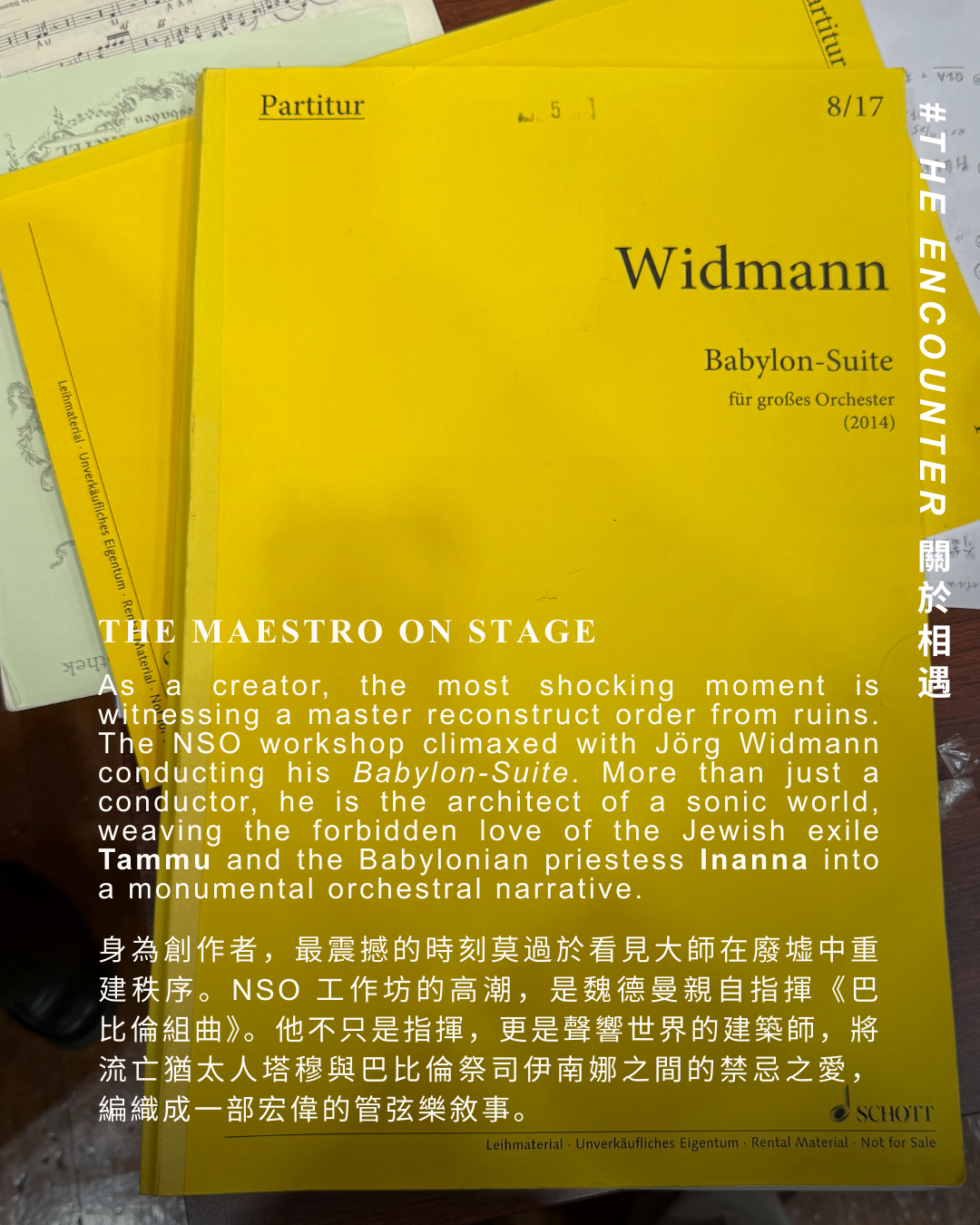
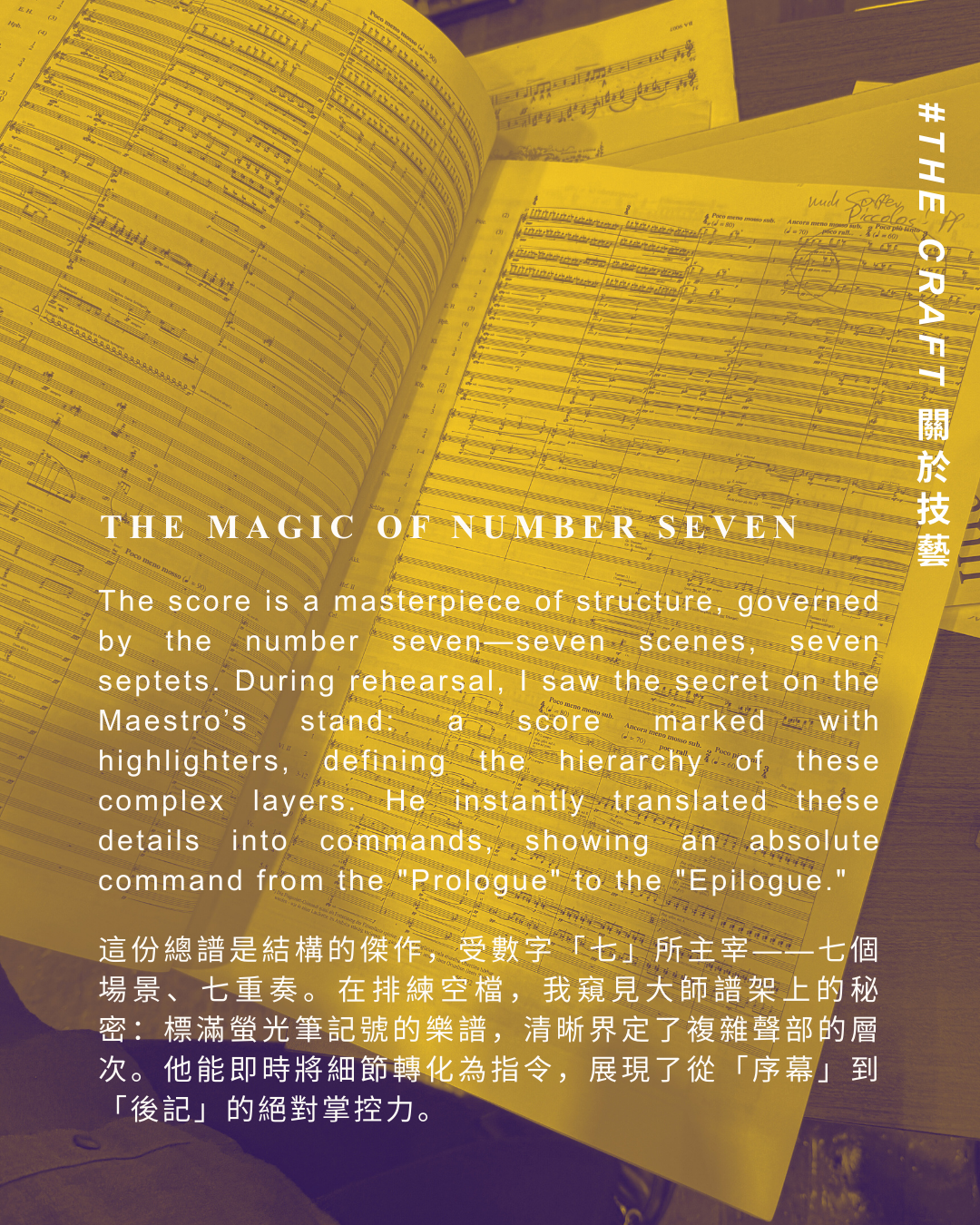
我仍記得打開《巴比倫組曲》總譜的第一刻所受到的視覺衝擊——密密麻麻的音符,是對各種樂器及機械裝置鉅細靡遺的描寫。第一次在排練室聽NSO與魏德曼排練時,聲響的複雜度甚至讓我一度難以跟上總譜的進度。魏德曼本人非常親切,在排練休息的空檔,我有幸與大師短暫交流,並一窺他譜架上的祕密。那是一份經過精心標記的樂譜,一排排的螢光筆記號標示出音樂的結構變化及每一段落的主次關係。在排練當下,他能即時地將這些譜面細節轉化為對樂團的調整指令。從作曲家的思維躍升至指揮台上的實踐,這種對音樂結構的絕對掌控力,展現了他作為全方位音樂家的深厚底蘊。
(3) 聽覺體驗:現代大都會的寓言
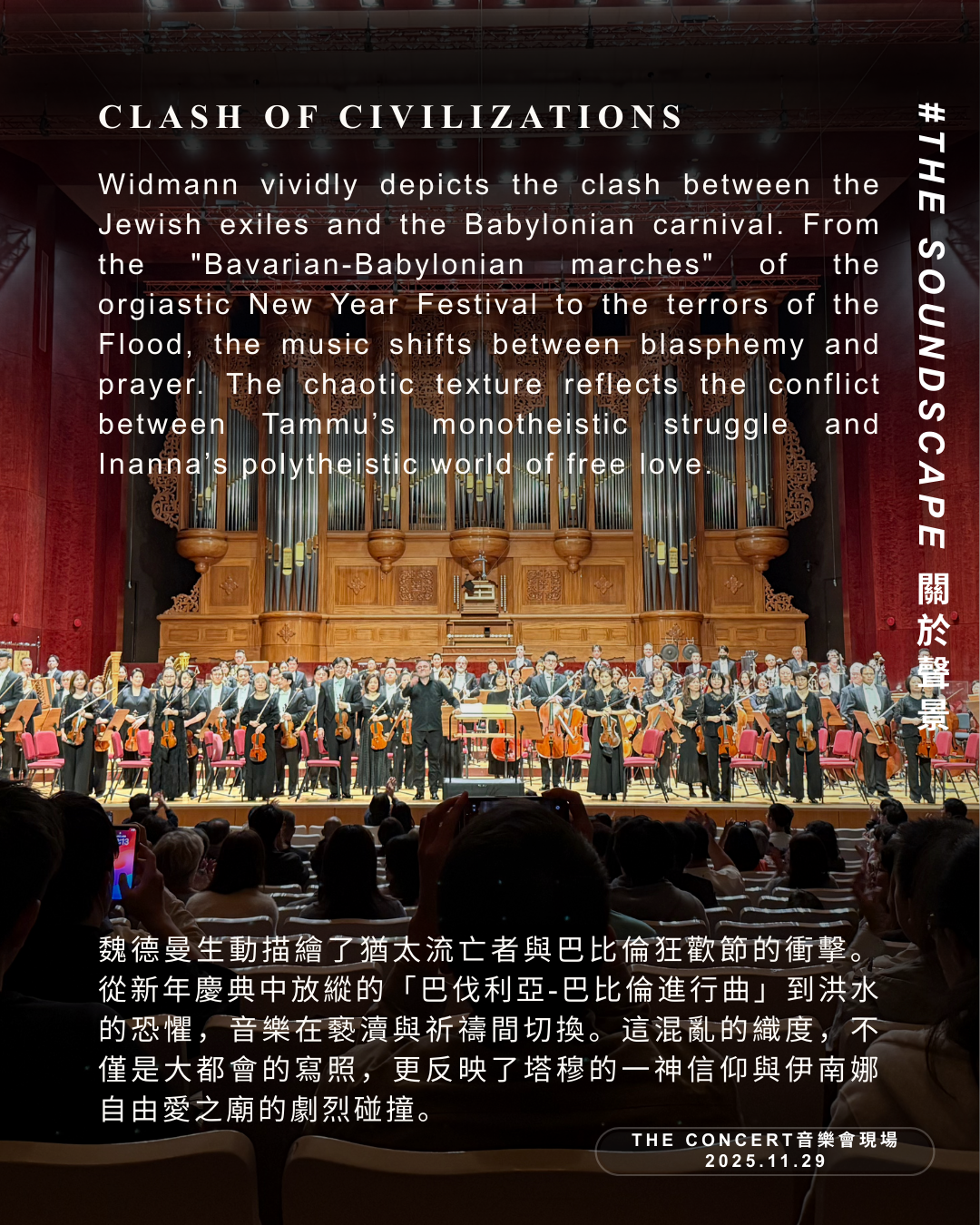
隨著聆聽次數增加,樂曲的結構逐漸在腦海中清晰浮現,我對魏德曼的「聲音敘事能力」感到極為佩服。《巴比倫組曲》取材自魏德曼的同名歌劇,將神話與愛情故事融合、極富史詩色彩的當代作品。他在混亂的織度中,精準地控制著聽覺的導向。樂曲中有許多極具記憶點的旋律片段,使其具備了老少咸宜的普及度,同時又穿插著具現代性的情緒轉折及聲音描寫。這種極具張力的配器與音色處理,將猶太流亡者的孤獨祈禱與巴比倫狂歡節的喧囂放縱強烈對撞,讓聽眾彷彿置身於一個文明衝突、慾望橫流,卻又充滿生命力的現代巴別塔之中。
(4) 創作反思:給當代作曲家的禮物
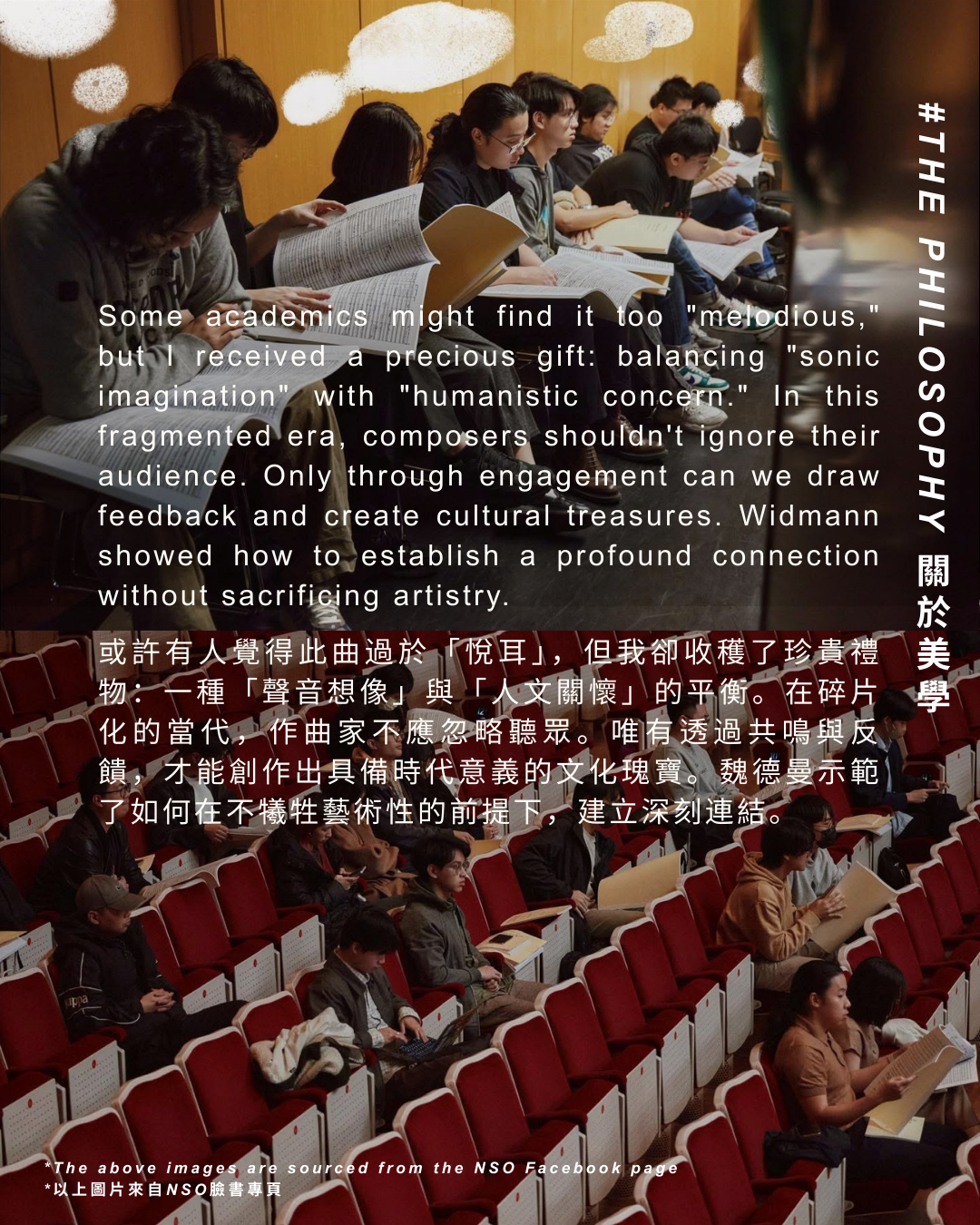
對於部分學院派作曲家來說,或許會覺得這首曲子過於「傳統」甚至「悅耳」,但我卻從中收穫了極其寶貴的禮物——那是一種「聲音想像」與「人文關懷」的兼顧。在21世紀碎片化及流行文化當道的現今,當代作曲家固然可以堅持艱澀的語彙,但不應完全忽略自己的聽眾。因為唯有觀賞者能參與進作品的欣賞,創作者才能從中汲取反饋、進行思辯,方能再次創作出得以代表群體、甚至上升至全人類的文化瑰寶。魏德曼示範了如何在不犧牲藝術性的前提下,建立與聽眾的深刻連結。
(5) 結語:時代的聲音
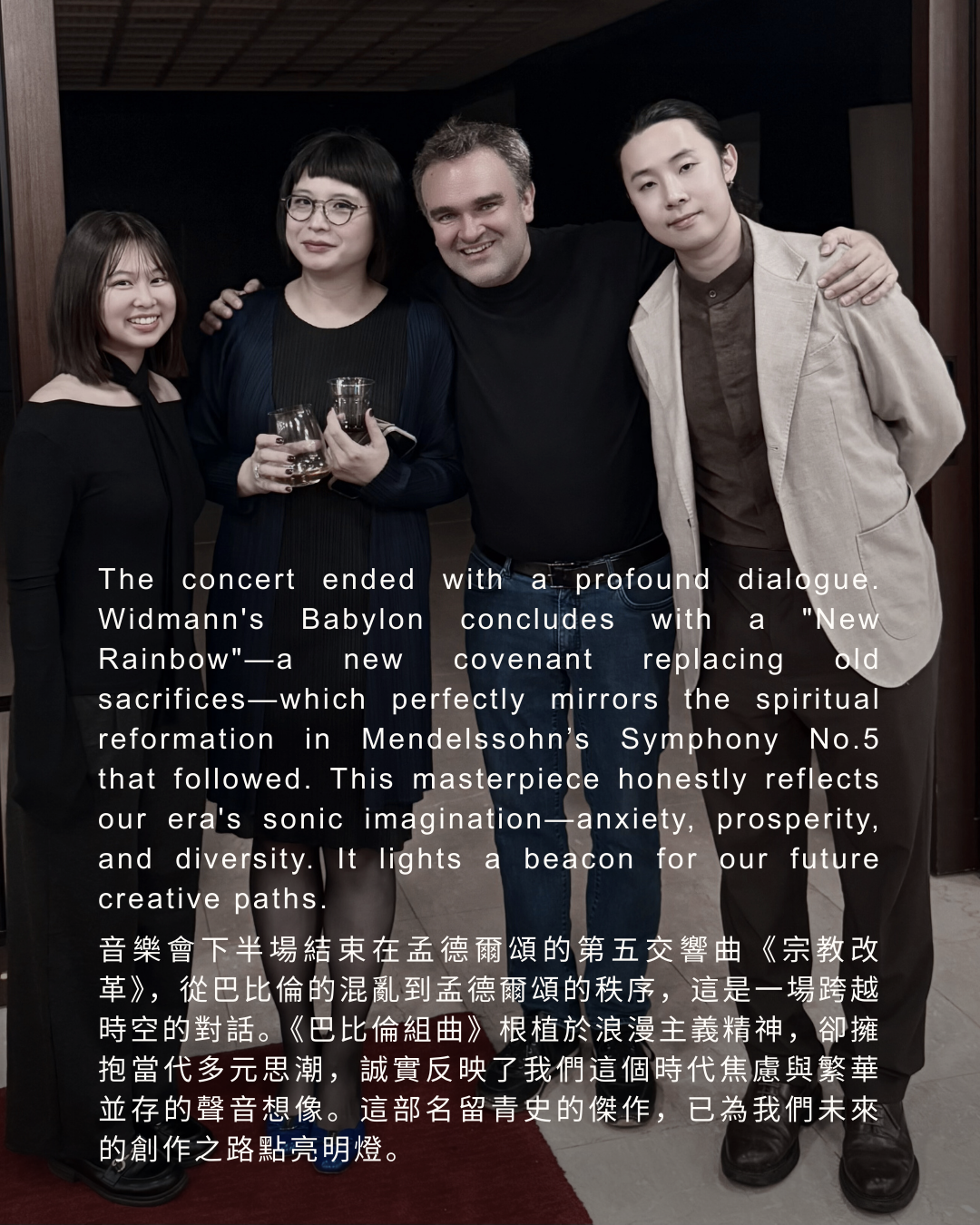
當晚的音樂會下半場,魏德曼指揮了孟德爾頌的《宗教改革》交響曲,從神話與愛情故事的混亂崩跌,回歸到堅固堡壘的信仰秩序。這場音樂會的策劃本身就是一場跨越時空的對話。老實而言,經過與大師的對話及現場聆聽後,我認為《巴比倫組曲》是一部根植於浪漫主義精神,卻又擁抱當代多元思潮的傑作。它誠實地反映了我們這個時代社會的聲音想像——焦慮、繁華、多元並存。從這點而言,我相信這將是一部能夠名留青史的作品,也為我們未來的創作之路點亮了明燈。
The Sonic Tower of Babel: Finding Order in Chaos with Jörg Widmann
(1) The Encounter: The Maestro on Stage
As a creator, the happiest moment is witnessing the sounds in one's mind come to fruition; the most shocking moment, however, is seeing a master break the rules and reconstruct order from the ruins. Being selected for the NSO "Music Encounter 2.0" Commission and International Composer Workshop was a true baptism of "contemporary sound" for my generation of young composers. The breathtaking climax of this event was undoubtedly the Apocalypse concert presented by the versatile musician Jörg Widmann and the NSO. In this concert on November 29th, Widmann, serving as both composer and conductor, led the orchestra to build a modern Tower of Babel for us with his Babylon-Suite, displaying unparalleled stage charisma.
(2) The Craft: Highlighters on the Score
I still remember the visual impact the moment I opened the score of the Babylon-Suite—densely packed notes providing minute descriptions of various instruments and mechanical devices. During the first rehearsal with the NSO and Widmann, the sonic complexity was such that I initially struggled to follow the score. Widmann himself was very approachable. During a rehearsal break, I had the privilege of a brief exchange with the maestro and caught a glimpse of the secret on his music stand. It was a meticulously marked score, with rows of highlighter markings indicating structural changes and the hierarchy of every section. In the moment of rehearsal, he could instantly translate these score details into adjustments for the orchestra. Leaping from the mindset of a composer to the practice of a conductor, this absolute command over musical structure demonstrated his profound depth as an all-around musician.
(3) The Soundscape: A Fable of the Modern Metropolis
As I listened more, the structure of the piece gradually became clear in my mind, and I grew extremely admiring of Widmann's "sonic narrative ability." The Babylon-Suite, drawn from Widmann's opera of the same name, is an epic contemporary work fusing myth and love stories. Within the chaotic texture, he precisely controls the auditory direction. The piece features many memorable melodic fragments, giving it a broad appeal suitable for all ages, while interlacing modern emotional shifts and sonic depictions. This tension-filled instrumentation and timbre processing strongly contrasts the solitary prayers of Jewish exiles with the raucous indulgence of the Babylonian carnival. It places the listener inside a modern Tower of Babel—defined by a clash of civilizations and overflowing desires, yet pulsing with vitality.
(4) The Philosophy: A Gift for Contemporary Composers
Some academic composers might find this piece too "traditional" or even "melodious," but I received an incredibly precious gift from it—a balance between "sonic imagination" and "humanistic concern." In the 21st century, where fragmentation and pop culture prevail, contemporary composers can certainly insist on a difficult vocabulary, but they should not completely ignore their audience. Only when viewers participate in the appreciation of a work can creators draw feedback and engage in dialectic thinking, thereby creating cultural treasures that represent the group or even ascend to all of humanity. Widmann demonstrated how to establish a profound connection with the audience without sacrificing artistry.
(5) The Revelation: The Sound of the Era
In the second half of the concert, Widmann conducted Mendelssohn's "Reformation" Symphony, returning from the chaotic collapse of myth and love stories to the steadfast order of faith. The curation of this concert was in itself a dialogue across time and space. Honestly speaking, after conversing with the maestro and listening to the performance live, I believe the Babylon-Suite is a masterpiece rooted in the spirit of Romanticism yet embracing contemporary pluralistic thought. It honestly reflects the sonic imagination of our society in this era—anxiety, prosperity, and diversity coexisting. In this regard, I believe this will be a work that goes down in history, lighting a beacon for our future creative paths.